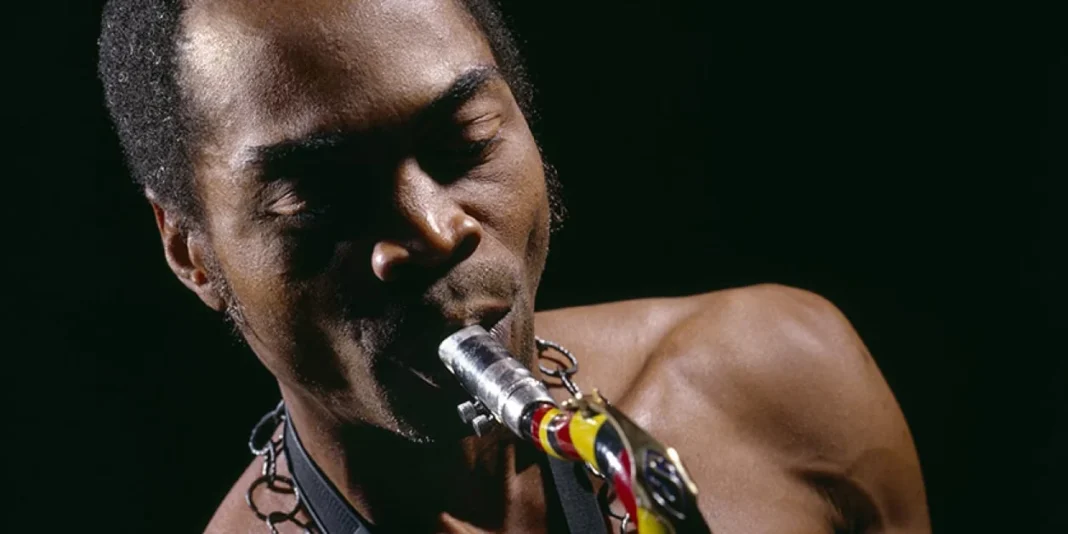
The enduring influence of Nigerian music legend Fela Anikulapo Kuti continues to inspire musicians, cultural historians and political thinkers around the world. More than two decades after his passing, his music and revolutionary ideas remain relevant to conversations about African identity, freedom, social justice and cultural resistance. Continuing its annual tribute to the legendary musician, Berlin’s Haus der Kulturen der Welt (HKW) hosted a special concert and discussion programme titled A Felasophical Gathering on 15 October 2026.
The event brought together musicians, scholars, activists and storytellers to celebrate Fela’s extraordinary contribution to music while exploring the political and philosophical ideas behind his work. Rather than focusing exclusively on his achievements as an Afrobeat pioneer, the gathering examined the wider significance of his cultural influence and his determination to challenge injustice through music.
Fela Kuti was much more than an entertainer. Through his distinctive fusion of traditional West African rhythms, jazz, funk and highlife, he developed Afrobeat into a powerful musical language. His compositions frequently addressed corruption, political oppression, colonial influence and the struggles of ordinary Nigerians. Songs such as “Zombie”, “Water No Get Enemy” and “Sorrow, Tears and Blood” demonstrated his ability to combine infectious rhythms with uncompromising social commentary.
The HKW programme recognised this important connection between music and political consciousness, creating a space where Fela’s ideas could be revisited through live performance, historical reflection and intellectual exchange.
One of the highlights of the programme was a lecture-performance by Ghanaian multi-instrumentalist, sound sculptor and educator Nii Noi Nortey, titled What Happens When History Is Not Only Remembered, but Sounded? His presentation explored the relationship between music, historical memory and African identity, drawing inspiration from the ideas of Senegalese historian and anthropologist Cheikh Anta Diop.
Nortey examined how sound can preserve and communicate histories that are often overlooked or marginalised. Through improvisation, traditional instruments, breath and electronic feedback, he explored the connections between cultural memory, displacement and survival. His performance also considered the historical significance of the transatlantic slave trade and how its consequences continue to shape contemporary African and diasporic experiences.
The musical programme opened with the Berlin Afrobeat Company (BAC), an ensemble with a particularly meaningful connection to Fela’s history in Germany. Founded in West Berlin in 1978, the group emerged following Fela Kuti and his band Africa 70’s celebrated appearance at the Berlin Jazz Days. Several musicians associated with that performance decided to remain in the city, helping establish a local community dedicated to Afrobeat.
Today, the Berlin Afrobeat Company brings together international musicians based in Berlin who continue to preserve and develop Fela’s musical legacy through performances and cultural initiatives. Their participation made the evening especially significant, connecting the history of Fela’s European influence with the contemporary Afrobeat movement.
Another major attraction was Ghanaian eight-piece ensemble Santrofi, which headlined the evening’s concert programme. Founded in Accra in 2019 and led by producer and bassist Emmanuel Kwadwo Ofori, the group has developed a distinctive sound rooted in traditional Ghanaian highlife while incorporating contemporary influences, including hip-hop.
The musicians have gained valuable experience performing and collaborating with established Ghanaian artists such as Ebo Taylor, Gyedu-Blay Ambolley, Pat Thomas and AB Crentsil. Their musical approach reflects a deep appreciation for Ghana’s rich musical heritage while demonstrating a willingness to introduce fresh ideas to traditional sounds.
Santrofi released its debut album, Alewa, in 2020, attracting international attention for its celebration of classic highlife. The group followed it with Making Moves in 2025, an album that combines traditional highlife rhythms, energetic Afrobeat horn arrangements and contemporary musical influences. Their appearance at HKW provided an opportunity to celebrate the connections between Ghanaian highlife and the wider African musical traditions that helped shape Fela’s Afrobeat.
The gathering took place at HKW’s Miriam Makeba Auditorium, with the Berlin Afrobeat Company performing at 7 p.m. and Santrofi following at 8:30 p.m.
Ultimately, A Felasophical Gathering demonstrated that Fela Kuti’s influence extends far beyond his legendary recordings. By bringing together live music, historical discussions and contemporary African perspectives, HKW created an opportunity to reconsider the importance of his artistic and political legacy.
The event was a reminder that Afrobeat is not simply a musical genre but also a vehicle for storytelling, resistance and cultural expression. Through the contributions of Nii Noi Nortey, the Berlin Afrobeat Company and Santrofi, Fela’s spirit continues to find new audiences and inspire conversations across generations and continents.